 (Image via
Cooking in a small kitchen often feels like a balancing act. You might find yourself juggling chopping boards on a tiny counter or struggling to find space for your favorite spices. Limited square footage does not mean you have to sacrifice culinary creativity or comfort. A well-designed compact kitchen can actually be more efficient than a sprawling one because everything you need remains within arm's reach. We will guide you through smart layout strategies that transform tight quarters into highly functional workspaces. This article explores essential concepts like the classic work triangle, innovative vertical storage, and multi-use furniture. You will discover practical ways to maximize every inch, ensuring your prep time is smooth, organized, and enjoyable.
Mastering the Work Triangle in Tight Spaces
Efficiency starts with the fundamental geometry of your workspace. Architects and designers have relied on the "kitchen work triangle" for decades to create functional layouts. This concept connects the three main work areas: the refrigerator, the sink, and the stove. The goal is to keep the distance between these points small enough to minimize steps but large enough to avoid cramping.
Compact kitchens naturally excel here. You do not need to walk ten feet to get a tomato from the fridge to the sink. However, a small footprint can sometimes mean these zones overlap too much, causing congestion. Optimizing your triangle in a compact layout requires strategic placement. Ensure that the path between these three points remains clear of obstacles like trash cans or island corners. Your movement should flow uninterrupted.
Consider the "zones" approach if a perfect triangle isn't possible. Grouping tasks can save just as much time. Keep your knives, cutting boards, and trash bin near the sink for a dedicated prep zone. Store your pots, pans, and spices next to the stove for a cooking zone. This logic minimizes the need to cross the room repeatedly, making your cooking process feel seamless and deliberate.
Choosing the Right Layout for Your Lifestyle
The shape of your kitchen dictates your workflow. Certain layouts naturally lend themselves to better efficiency in small homes. Understanding the strengths of each configuration helps you make the best choice for your renovation or reorganization.
The Galley Kitchen
Many professional chefs prefer the galley layout for its incredible efficiency. This design features two parallel countertops with a walkway in between. It maximizes vertical wall space and keeps all appliances easily accessible. You can pivot from the sink on one side to the stove on the other with a simple turn. Lighting is crucial here to prevent the space from feeling like a tunnel. Under-cabinet lighting ensures every inch of counter space is bright and usable.
The L-Shaped Kitchen
An L-shaped layout utilizes two adjacent walls, forming an "L." This design opens up the rest of the room, often allowing for a small dining table or a mobile island in the center. It eliminates traffic through the work triangle, protecting the cook from interruptions. The corner where the two counters meet can become a dead zone, so utilizing lazy Susans or specialized corner drawers is essential to keep that storage accessible.
The One-Wall Kitchen
Studio apartments and open-concept lofts often feature a single-wall kitchen. All appliances and cabinets run along one linear wall. This is the ultimate space-saver, but it can challenge efficiency since you have to walk the length of the line to move between tasks. Utilizing vertical space is non-negotiable here. Stacking cabinets to the ceiling and using a portable island for extra prep space can transform a one-wall setup into a powerhouse of productivity.
Going Up: The Power of Vertical Storage
Floor space is precious, so look to your walls for expansion. Utilizing vertical space changes the game for compact kitchens. Standard cabinets often leave a gap between the top shelf and the ceiling. This is wasted potential.
Installing cabinets that reach all the way to the ceiling provides storage for items you do not use daily. Holiday platters, large stockpots, and specialty appliances can live up high, freeing up prime lower cabinets for everyday essentials. Keep a sturdy, foldable step stool nearby to access these items safely.
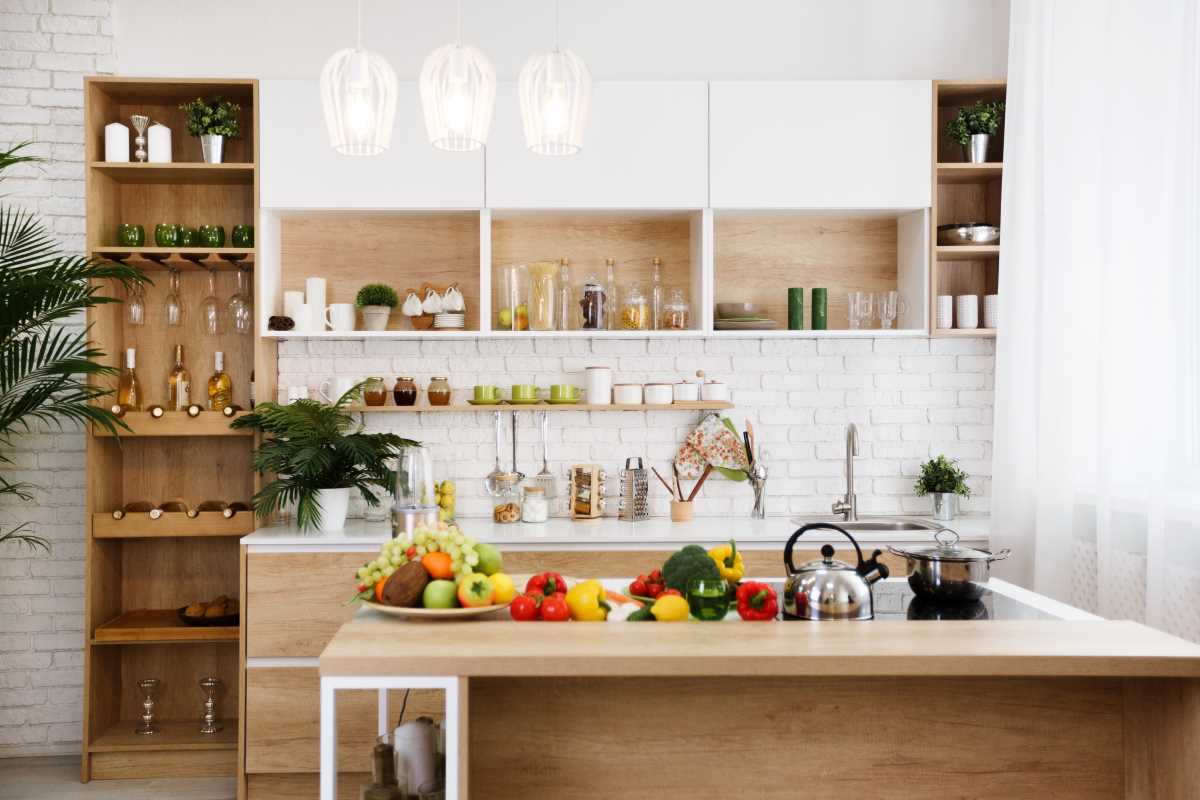
Open shelving is another fantastic vertical strategy. It makes a small room feel airier and more open compared to heavy, closed cabinetry. Floating shelves allow you to keep frequently used dishes, glasses, and spices right where you can see them. Hooks and rails installed on the backsplash can hold ladles, spatulas, and measuring cups. Even a magnetic knife strip on the wall clears a bulky knife block off your counter, giving you more room to chop and mix.
Multi-Functional Furniture and Flexible Elements
Adaptability is the secret weapon of a small kitchen. Furniture that serves more than one purpose allows you to do more with less. Rigid, fixed elements can make a small room feel restrictive, whereas flexible pieces give you options.
The Rolling Island
A fixed island might not fit in a narrow kitchen, but a rolling cart offers the best of both worlds. You can wheel it into the center of the room when you need extra surface area for rolling dough or assembling plates. Once you are finished, you can tuck it against a wall or into a closet to open up the floor plan. Look for carts with shelves or drawers underneath to add bonus storage for linens and utensils.
Fold-Down Tables
Wall-mounted, drop-leaf tables provide a dining or prep surface that disappears when not in use. You can pop it up for a quick breakfast or to hold ingredients while you cook. Folding it down creates immediate open space, making the kitchen feel larger and easier to navigate during cleanup. This solution is perfect for households that need versatility without permanent clutter.
Sink Accessories
The sink is often the largest fixture in a small kitchen. Turning it into a workable surface maximizes your prep area. Over-the-sink cutting boards fit snugly over the basin, allowing you to wash produce and chop it immediately without wetting the counter. Roll-up drying racks that sit over the sink also save space, eliminating the need for a bulky countertop dish rack.
Organizing for Speed and Ease
A small kitchen punishes clutter. Disorganization slows you down and makes cooking feel like a chore. Implementing strict organizational systems ensures that efficiency remains high.
"Mise en place" is a French culinary phrase meaning "everything in its place." Adopting this philosophy is vital. Every tool and ingredient should have a designated home. Drawer dividers prevent utensils from becoming a tangled mess. Risers in cabinets allow you to stack plates and bowls neatly without risking a topple.
Pull-out pantries are particularly effective in tight spaces. These tall, narrow units slide out from between the fridge and the wall, revealing shelves of canned goods and jars accessible from both sides. This ensures that nothing gets lost in the dark back corners of a deep cabinet. Clear containers for dry goods also help efficiency. You can see exactly what you have and how much is left, streamlining your grocery list and prep process.
Lighting and Visual Perception
Good lighting does more than help you see; it alters how you perceive the size of the room. A dimly lit kitchen feels smaller and more confined. Layering your lighting creates a sense of depth and makes the workspace more inviting.
Task lighting is essential for efficiency. Shadows cast by overhead lights can make chopping dangerous and reading recipes difficult. LED strips installed under upper cabinets flood the countertop with bright, focused light. This makes the workspace feel larger and more professional.
Reflective surfaces also help maximize light. Glossy tiles, stainless steel appliances, and glass cabinet doors bounce light around the room. This visual trickery makes the walls seem to recede, reducing the feeling of being closed in. Keeping the color palette light and neutral further enhances this effect, creating a calm, airy atmosphere where you can focus on creating delicious meals.
Embracing the Compact Lifestyle
Living with a small kitchen does not mean compromising on your culinary dreams. It simply requires a thoughtful approach to design and organization. You have the opportunity to create a space that is custom-tailored to your specific needs.
Focusing on the work triangle, maximizing vertical storage, and choosing flexible furniture allows you to build a kitchen that works as hard as you do. Efficiency is not about the size of the room; it is about how well the room serves you. Every smart decision you make—from the layout to the drawer organizers—adds up to a smoother, more enjoyable cooking experience. You can turn your compact kitchen into the heart of your home, proving that great things truly do come in small packages.